The best books to learn Italian, from your first textbook to your first novel
The Italian books worth your time at each level: a coursebook, a grammar you'll actually use, graded readers, and the first real novels to try, from Rodari and Calvino to Ginzburg and Ferrante.
Short answer: you need three kinds of book. One coursebook or grammar to explain how Italian works; a pile of easy readers written for your level; and, from about B1, real Italian novels with short chapters and plain prose. Here are the ones we'd choose at each stage.
How to use books (and not give up on page twelve)
- One explainer, many stories. A grammar book is for looking things up and doing a few exercises. Most of your reading time should go to stories.
- Read below your level. If you're looking up more than a word or two per page, the book is too hard for now. Easy reading is where vocabulary grows.
- Don't look up every word. Guess from context, underline, move on. Look up only the words that keep coming back.
- Read with audio when you can. Many graded readers come with free recordings. Hearing the text fixes your pronunciation and speeds up your reading.
- Re-read. A story is easier, and teaches you more, the second time.
Coursebooks: the backbone
Nuovo Espresso (Alma Edizioni)
One of the most widely used series in Italian language schools, written entirely in Italian and organised by CEFR level. Clear units, real-life dialogues, and audio and video online. It's made for classes, but works on your own if you take it slowly. almaedizioni.it
Nuovo Contatto (Loescher)
Another series used in many Italian schools, with a volume for each level. Also entirely in Italian. loescher.it
Complete Italian (Teach Yourself)
If you'd rather have explanations in English, this course takes you from beginner to intermediate on your own, with audio. Less lively than the Italian series, but you'll never be lost.
Grammar books you'll actually use
Grammatica pratica della lingua italiana, Susanna Nocchi (Alma Edizioni)
The classic practice grammar for learners: a short explanation on each page and plenty of exercises, with the answers. Written in simple Italian, for beginners up to intermediate.
Practice Makes Perfect: Complete Italian Grammar, Marcel Danesi (McGraw Hill)
Explanations in English, lots of exercises and an answer key. Good when you want to check a rule without reading Italian about it.
Soluzioni: A Practical Grammar of Contemporary Italian, Denise De Rôme (Routledge)
For intermediate learners who want to know how Italians actually use the grammar, with examples from real speech and writing.
A Reference Grammar of Modern Italian, Martin Maiden and Cecilia Robustelli (Routledge)
The big one. You won't read it cover to cover, but from B2 up it answers the questions other books skip.
Graded readers: where reading starts
Graded readers are short books written for learners at a set level, with vocabulary that grows from one level to the next. They're the most underrated tool in language learning: you read whole stories instead of exercises, and you actually finish them.
The "Italiano facile" readers (Alma Edizioni)
A long-running series of short novels for learners, graded from A1 to B2, with exercises and free audio online. Mysteries, love stories and adventures set all over Italy. The first level runs to around 500 words; the books grow from there.
Short Stories in Italian for Beginners, Olly Richards (Teach Yourself)
Eight stories in different genres, from science fiction to crime, with a glossary, a summary and comprehension questions after each chapter. Best around A2 to B1. There's a second volume when you finish.
Free stories in Verso
We publish bilingual Italian stories and podcasts from A1 up, free to read on the web. Every word can be tapped for its translation, and you don't need an account. A few to start with:
 A1 · Story · 3 minUna mattina in bibliotecaA morning at the libraryRead free →
 A1 · Story · 3 minIl gatto del cortileThe courtyard catRead free →
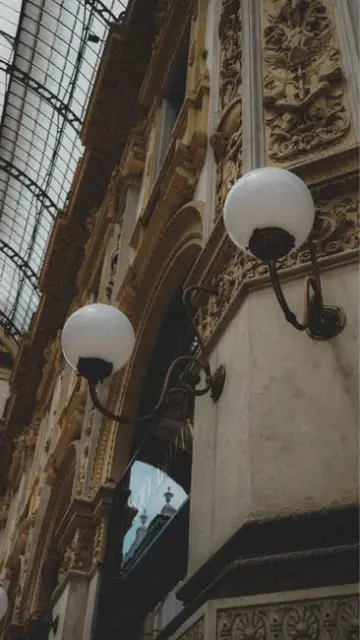 A2 · Story · 4 minUn weekend a FirenzeA weekend in FlorenceRead free →
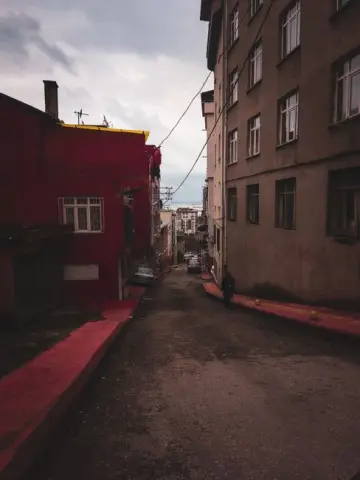 B1 · Story · 5 minIl cinema neorealistaNeorealist cinemaRead free →
Your first real novels (B1 and up)
Choose books with short chapters, plain language and a story that pulls you along. These are good first ones, roughly from easiest to hardest:
- Gianni Rodari, Favole al telefono (1962). Very short, funny tales that a travelling father tells his daughter over the phone every night. Written for children, loved by adults, perfect at a page a day.
- Antoine de Saint-Exupéry, Il piccolo principe. You probably know the story already, which makes the Italian much easier to follow.
- Italo Calvino, Marcovaldo (1963). Twenty short, gentle stories about a factory worker looking for nature in a grey city, season by season. Calvino's Italian is clear and precise.
- Alessandro Baricco, Seta (1996). A short novel about a silkworm trader who travels to Japan in the 1860s, told in very short chapters and simple, rhythmic sentences.
- Niccolò Ammaniti, Io non ho paura (2001). One hot summer in a tiny southern village, a boy makes a terrible discovery. Gripping, in plain modern Italian, and there's a film to watch afterwards.
- Natalia Ginzburg, Lessico famigliare (1963). A memoir of the author's family in Turin, built from the phrases and sayings they repeated for years. Winner of the Strega Prize, and a lesson in everyday Italian.
- Jhumpa Lahiri, In altre parole (2015). The Pulitzer-winning American writer's essays about learning Italian, written in Italian. The English edition, In Other Words, prints both languages on facing pages: ideal for learners.
- Elena Ferrante, L'amica geniale (2011). The first of the Neapolitan novels. Longer and richer, so save it for B2, and keep Ann Goldstein's English translation nearby.
Later on, try Andrea Camilleri's Inspector Montalbano mysteries. They're great fun but full of Sicilian, so wait until standard Italian feels easy.
Where to get them
Italian bookshops such as Feltrinelli and IBS sell online, and the big international shops stock most of these books. Many are available as e-books too, where you can look up a word by pressing on it: install an Italian–English dictionary first. Libraries often keep graded readers in their languages section.
And if you'd like more help with the reading habit itself, start with the best way to learn Italian.