The best apps to learn Italian in 2026, and what each one is for
An honest guide to Italian learning apps: Duolingo, Babbel, Busuu, Pimsleur, italki, Anki, LingQ and Verso. What each does well, what it misses, and how to combine them.

Short answer: there's no single best app. Duolingo is best for building a daily habit, Babbel for clear structured lessons, Pimsleur for speaking from audio, italki for real conversation with a tutor, Anki for remembering words, LingQ for reading lots of real Italian, and Verso for reading, listening and speaking at your level in one place. Most people who get far use two or three together.
A note first: we make Verso, so read that section with this in mind. We've tried to be as fair to the others as we'd want them to be to us, and we earn nothing from any link on this page.
At a glance
| App | Best for | Free to use? | Watch out for |
|---|---|---|---|
| Duolingo | A daily habit and your first words | Yes, with ads | Slow to get you to real conversation |
| Babbel | Structured lessons with grammar explained in English | A few lessons | Little long reading or listening |
| Busuu | Corrections from native speakers | Limited | Feedback quality varies |
| Pimsleur | Speaking and pronunciation, hands-free | Free trial | Almost no reading |
| italki, Preply | Conversation with a real tutor | No, pay per lesson | Cost adds up; tutors vary |
| Tandem, HelloTalk | Free practice with Italians | Yes | You need patient partners |
| Anki | Remembering words for years | Yes (paid on iPhone) | Doesn't teach; you bring the cards |
| LingQ | Reading lots of real Italian | Limited | Hard going for beginners |
| Verso | Reading, listening and speaking at your level | Yes, 10 minutes a day | Young app; smaller library; no human tutors |
The apps, one by one
Duolingo
The best-known language app, and for good reasons: lessons take a couple of minutes, streaks and leagues bring you back, and the basic version is free. For your first weeks of Italian it's a pleasant way to meet basic words and get used to how the language sounds.
What it misses: most exercises are short sentences without context, and there's little long reading or listening. Plenty of people keep a streak for a year and still can't follow a conversation. Use it for the habit, and add something with real stories and real speaking. duolingo.com
Babbel
Babbel feels more like a classic course: short lessons built around dialogues, grammar explained in English, speaking exercises with speech recognition, and review built in. It's good at the "why" that Duolingo skips.
What it misses: it's paid after the first lessons, and it's still mostly short exercises, so you'll want to add reading and listening to real Italian. babbel.com
Busuu
Busuu's lessons are similar to Babbel's, with one standout feature: you write or record short answers, and native Italian speakers in the community correct them. When you have no teacher, that feedback is worth a lot.
What it misses: the feedback is only as good as the person who gives it, and most of the useful features are paid. busuu.com
Pimsleur
Pimsleur is audio first. In each 30-minute lesson you listen, repeat and answer out loud, and words come back at growing intervals. It's very good for pronunciation and for getting whole phrases out of your mouth quickly, and you can do it while walking or driving.
What it misses: there's almost no reading, and the pace is slow if you also want to understand written Italian. pimsleur.com
italki and Preply
These aren't courses but marketplaces: you book one-to-one video lessons with Italian tutors, from relaxed conversation partners to qualified teachers, and pay per lesson. Nothing else improves your speaking as fast. Thirty minutes a week makes a real difference once you're past the first couple of months.
What to know: prices and quality vary a lot from tutor to tutor, so try two or three before you settle. A tutor works best when you get your input elsewhere and use the lesson to talk. italki.com · preply.com
Tandem and HelloTalk
Language-exchange apps: you chat with Italians who are learning English, half in each language. It's free, it's real, and now and then it's the start of a friendship. It depends on finding patient partners, and it gets much easier from about A2, once you can say a few things about yourself. tandem.net · hellotalk.com
Anki
A plain-looking flashcard app with one of the best spaced-repetition systems around. Serious learners swear by it. It's free on computers, Android and the web; the iPhone app is a one-off purchase. Anki doesn't teach you anything by itself: you make your own cards or download shared decks, and keeping the habit is up to you. ankiweb.net
LingQ
LingQ is built for reading and listening to a lot of real content: its own lessons, or articles and transcripts you import. It tracks the words you know and highlights the rest. It shines from about B1, when you can read real Italian with some help. For complete beginners it can feel like a wall of text. lingq.com
Verso
Verso is ours. It's built around reading and listening at your level: bilingual short stories, slow podcasts and short real-life scenes from A1 to C1. Every word can be tapped for its translation and saved to a review deck that brings it back on schedule. Olo, the tutor, runs short lessons on a map and gets you answering out loud, and practice chats let you try a restaurant, a job interview or a first date at your level.
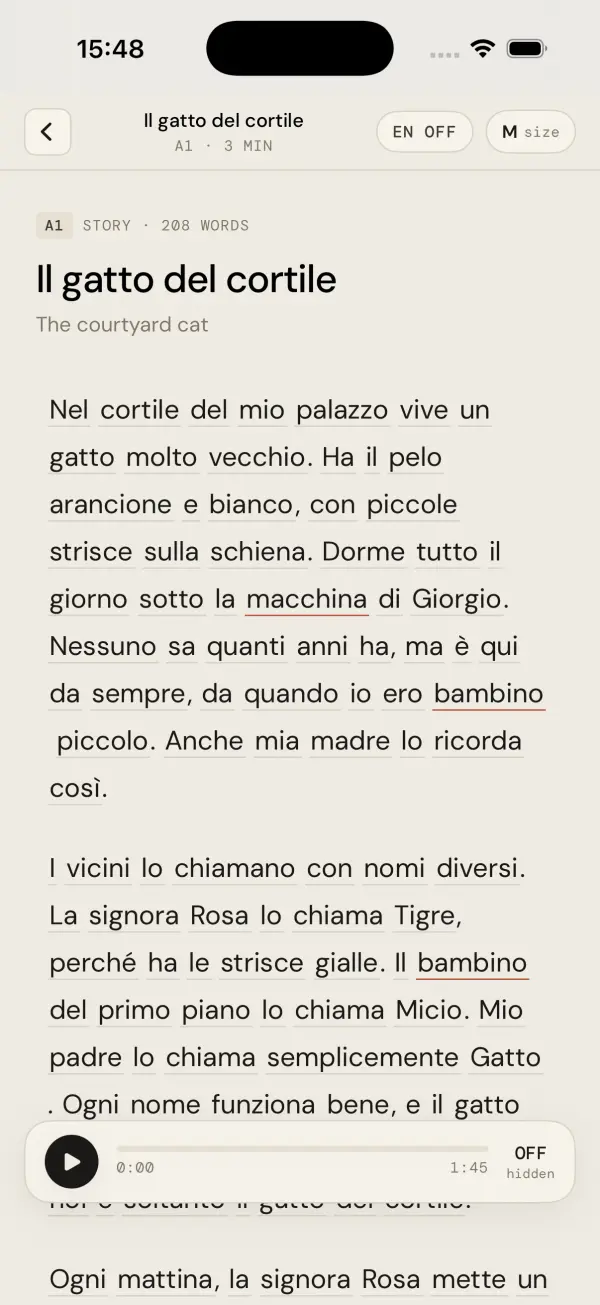
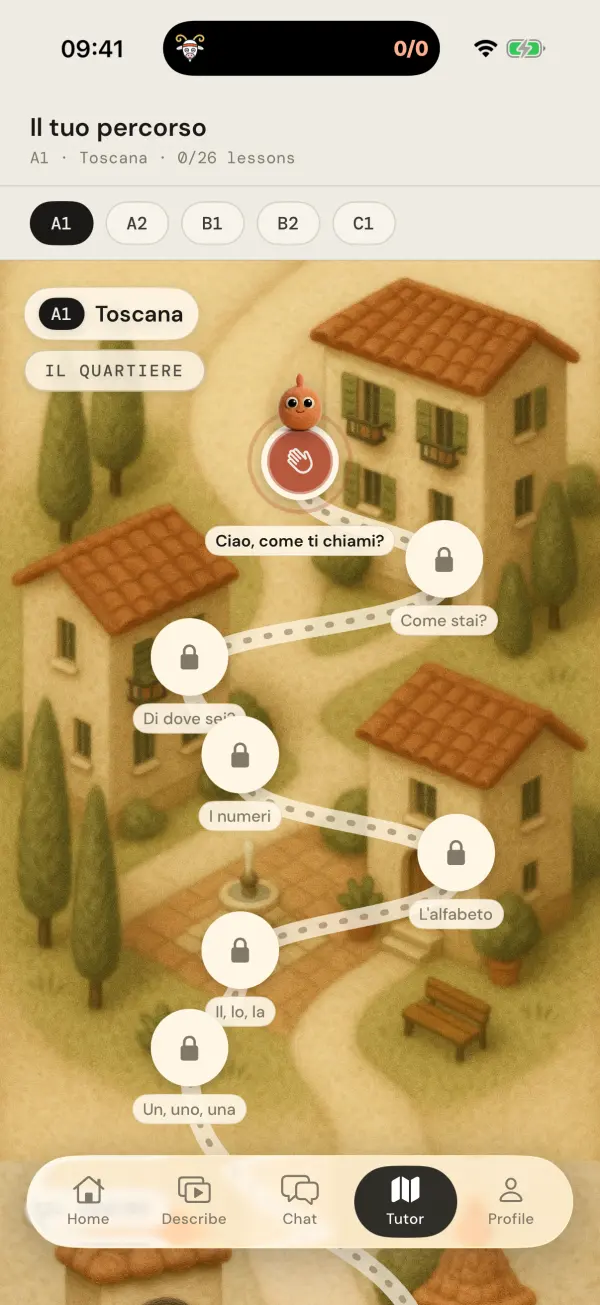
What it misses: it's a young app with a smaller library than the big names, there are no human tutors, and the voices are high-quality AI voices, not recordings of people. It's on iPhone, and in the browser for Android, iPad and laptops; there's no native Android app yet.
Price: free for ten minutes a day, three tutor lessons a week and a daily chat. Verso Plus removes the limits for €7.99 a month or €44.99 a year.
Free extras that aren't apps
- Podcast Italiano: clear, natural Italian about language and culture, with episodes for different levels.
- Coffee Break Italian: a long-running podcast course that starts from zero.
- Easy Italian: street interviews with Italians, subtitled in Italian and English.
- Italy Made Easy: grammar and everyday Italian explained in English.
- News in Slow Italian: the week's news read slowly, with grammar notes. Mostly paid, with free samples.
- RaiPlay: Italian public television, for B2 and up. Some of it only plays in Italy.
How to combine them
Pick one from each column, then stop shopping for apps:
| Input (most of your time) | Review (5 minutes a day) | Speaking (every week) |
|---|---|---|
| Verso, LingQ, podcasts, YouTube | Verso's review deck or Anki | A tutor on italki or Preply, a Tandem partner, or Verso's tutor and chats |
In the first months, a beginner might add Duolingo or Babbel for structure. For the full routine, see the best way to learn Italian. Or try a free Verso story right now, no account needed: